About Udo

This author has not yet filled in any details.
So far Udo has created 371 blog entries.

May 2026

White waterlily

2026-05-01T10:27:51+01:00

The white water lily is our customers' favorite choice when it comes to selecting plants for biological pools. Nymphaea alba - the scientific name of this native species - possesses virtues that make it ideal for this use compared to many cultivars. As a species found in wetlands throughout Portugal, from North to South, [...]

White waterlily2026-05-01T10:27:51+01:00

Every natural swimming pool is unique

2026-05-01T10:27:24+01:00

Just like natural lakes, every biological pool possesses its own characteristics that make it unique. Factors such as its placement on the terrain, exposure to sun and prevailing winds, interaction with surrounding vegetation, shade, and leaf fall all determine how a natural pond or biological pool develops. In the case of the latter, the [...]

Every natural swimming pool is unique2026-05-01T10:27:24+01:00

A decade of pure enjoyment

2026-05-01T10:26:09+01:00

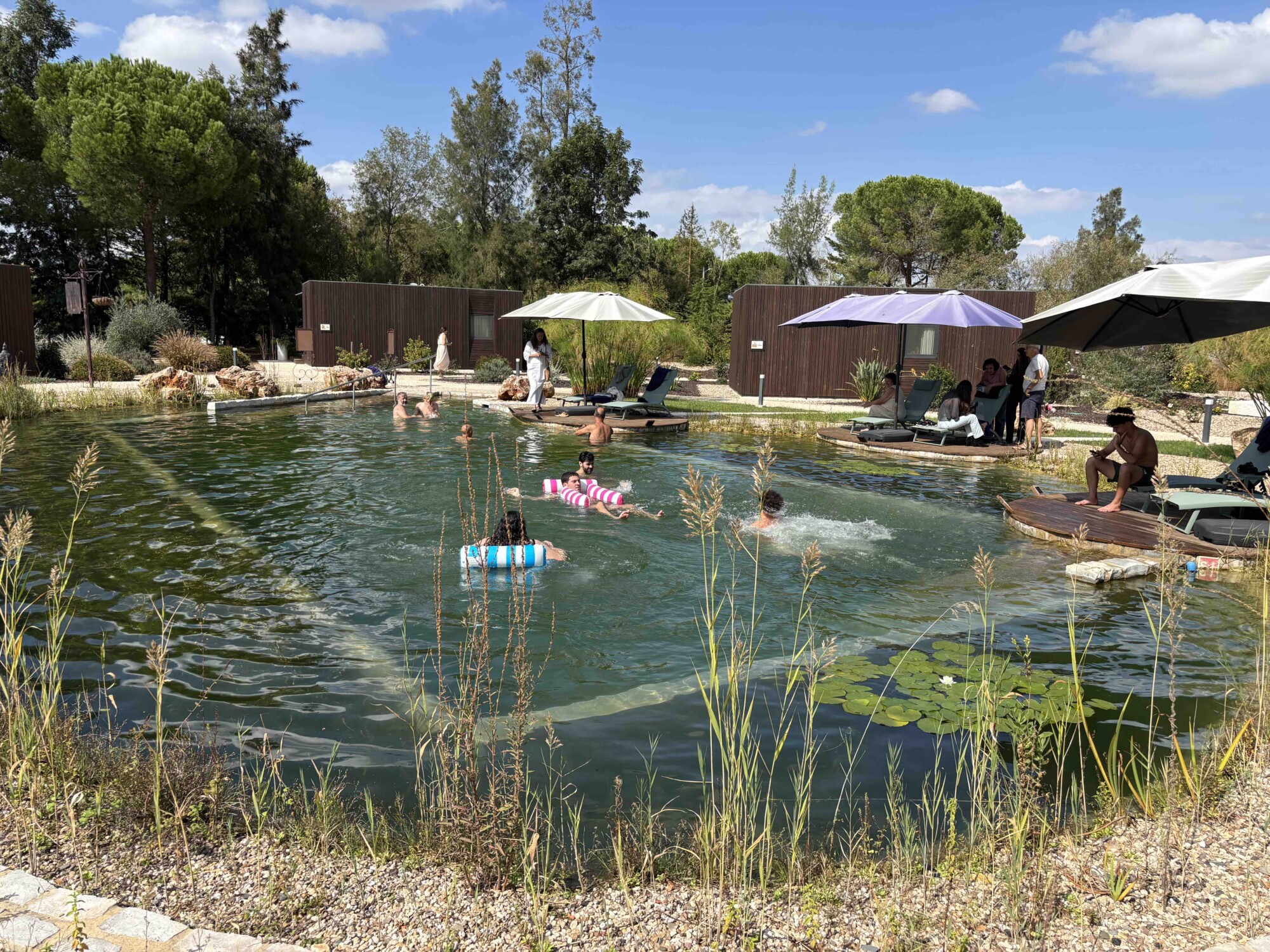
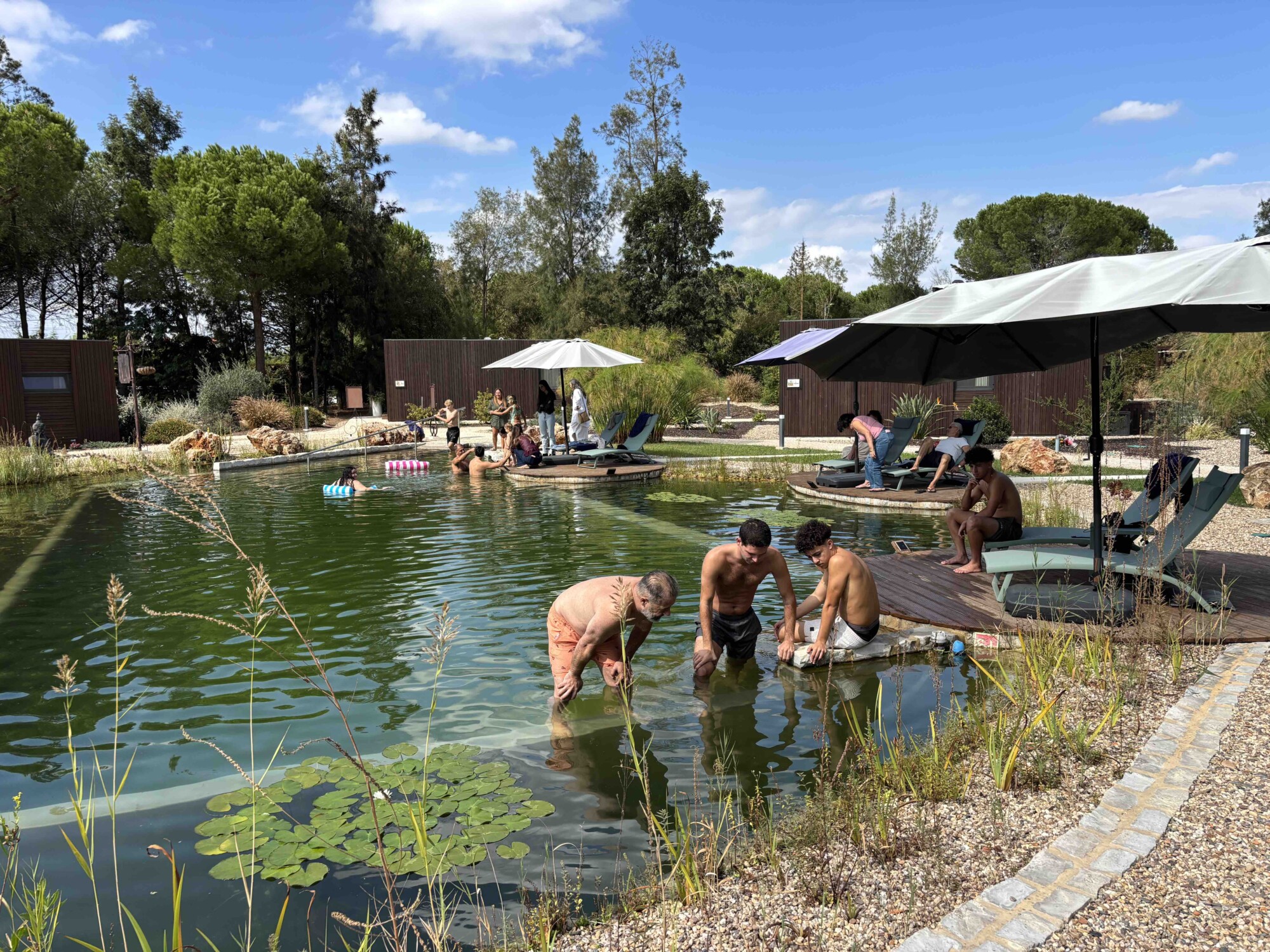
A decade of pure enjoyment in the waters of the biological pool at Club Med Albufeira. This is our most-used commercial biological pool throughout the year. During the resort's peak season, it accommodates as many as 250 people per day. The biological pool was inaugurated in 2016, following a construction period of just eight [...]

A decade of pure enjoyment2026-05-01T10:26:09+01:00

April 2026

Set of rectangles

2026-04-01T10:21:05+01:00

Anyone who wants to swim lanes in pools might dream of a long swimming lane, delimited by walls used for somersaults. A rectangular pattern might make sense, but the story doesn't necessarily have to end there. There can be much more interesting ideas that combine the desired features with an unusual aspect. The biological [...]

Set of rectangles2026-04-01T10:21:05+01:00

Tadpoles

2026-04-01T10:19:50+01:00

It all begins with the Greek term gýrinos (γυρίνος). At that time, the word was already used to describe these small aquatic creatures. The root comes from gyrós, which means curved, rounded, or circular. Then, as happened with much of the scientific and biological vocabulary, the term migrated into Latin as gyrinus. The logic [...]

Tadpoles2026-04-01T10:19:50+01:00

April showers bring May flowers

2026-04-01T10:19:21+01:00

Water is the most important building element in the construction of a biological pool; thus, it is a binding resource for transforming a lined pit into a swimming pond that reflects on its water mirror the environment, the sky with its clouds, trees, gardens, and surrounding houses. The availability of water on a property, [...]

April showers bring May flowers2026-04-01T10:19:21+01:00

March 2026

Zooplankton

2026-03-02T15:05:06+00:00

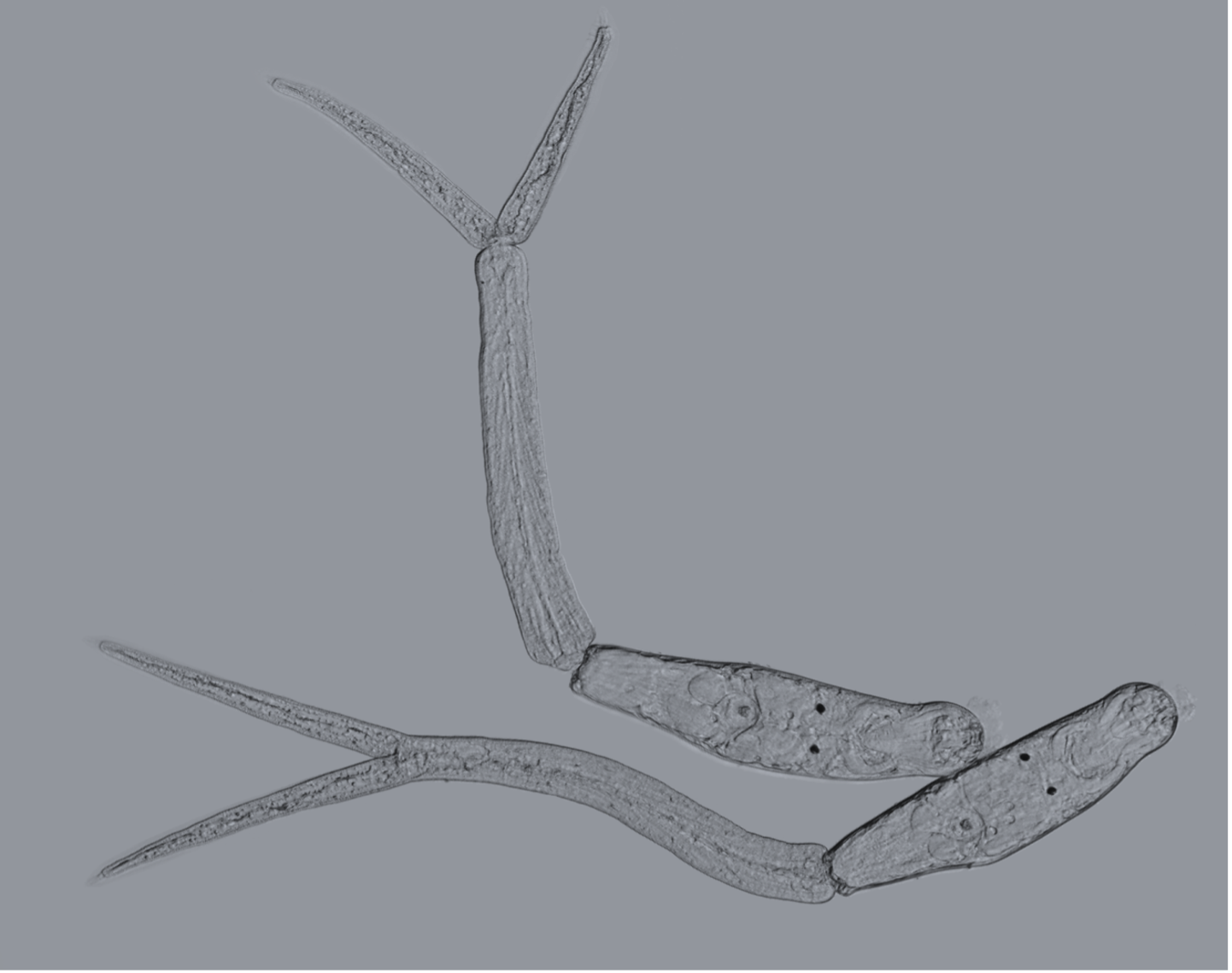
Healthy aquatic ecosystems possess the remarkable capacity for self-regulation, which can also be considered a form of self-cleaning. For lakes, as well as biological pools, this means that nutrients and harmful substances introduced into the water are transformed by physical, chemical, and biological processes, so that their negative impact on the ecosystem is reduced. [...]

Zooplankton2026-03-02T15:05:06+00:00

World Rewilding Day

2026-03-02T15:03:44+00:00

March, 20th is World Rewilding Day. What does this have to do with biological pools? - Biological pools attempt to follow nature's model as closely as possible, especially in terms of planting. We select appropriate species for each type of filling water, and the planting composition strictly follows the phytosociological standard. That is, we [...]

World Rewilding Day2026-03-02T15:03:44+00:00

Stormwater outlet

2026-03-02T15:03:16+00:00

The stormwater outlet or overflow pipe is an often overlooked part of a biological pool, but it's crucial for the proper functioning of the system. Water falling on the surface increases the amount of water in the pool. If it's more than a drizzle, it results in a rise in the water level relative [...]

Stormwater outlet2026-03-02T15:03:16+00:00

February 2026

Endangered plants

2026-02-02T07:37:18+00:00

February 2nd marks World Wetlands Day, a date that reminds us that around 20% of aquatic plant species globally are threatened and are on the IUCN Red List. In Portugal, the situation of aquatic flora and wetlands is particularly critical, presenting threat percentages significantly higher than the world average. According to the Red List [...]

Endangered plants2026-02-02T07:37:18+00:00
Go to Top