What is a biological swimming pool?
 Important to know
 Beyond the swim
 How to build
 Compare
 PB 22.000
 Biological swimming pools of Public use
 Janguiscina
 Who we are
 Biological swimming pools
 Landscape architecture
 ETAP
ETAP Solar Sauna
 Rewilding
 News
News Photo of the month
 Gallery
 Holidays with Swimming Pond
 Testimonials
 Awards
 Biological swimming pools around the World
 Piscinas Biológicas® – Live
 FAQs
FAQs Downloads
 Shop
Shop


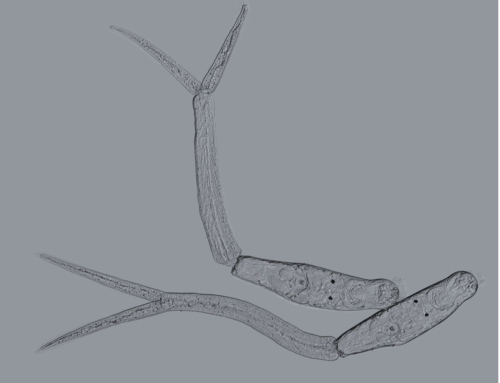
Life in a biological pool is so diverse that it is no surprise that butterflies live there underwater. Well, they are not butterflies capable of flying because they are just the butterfly larvae with the scientific name Parapoyns stratiotata that feed on leaves of aquatic plants as shown in the photo.
Those caterpillars are very active and live on aquatic plants underwater in tubular webs made of intertwined plant parts. Occasionally, they leave their web to fan themselves with oxygen-rich water, using oscillating movements of the front of their bodies. They feed on many different species of plants, always underwater.
The caterpillar can hibernate. To pupate, it weaves a dense, whitish cocoon. That one is filled with air and attached to the stem of host plant. Their flight period runs from May to September; in regions with favorable climatic conditions such as Portugal, at least two generations of butterflies are formed per year.
The presence of this species does not represent, in any way, a danger to aquatic vegetation. Having these larvae with us in the biological pool is an honor to host an insect whose biology is so adapted to aquatic life as a young animal and to the air as an adult.