What is a biological swimming pool?
 Important to know
 Beyond the swim
 How to build
 Compare
 PB 22.000
 Biological swimming pools of Public use
 Janguiscina
 Who we are
 Biological swimming pools
 Landscape architecture
 ETAP
 Solar Sauna
 Rewilding
 News
 Photo of the month
 Gallery
 Holidays with Swimming Pond
 Testimonials
 Awards
 Biological swimming pools around the World
 Piscinas Biológicas® – Live
 FAQs
 Downloads
 Shop


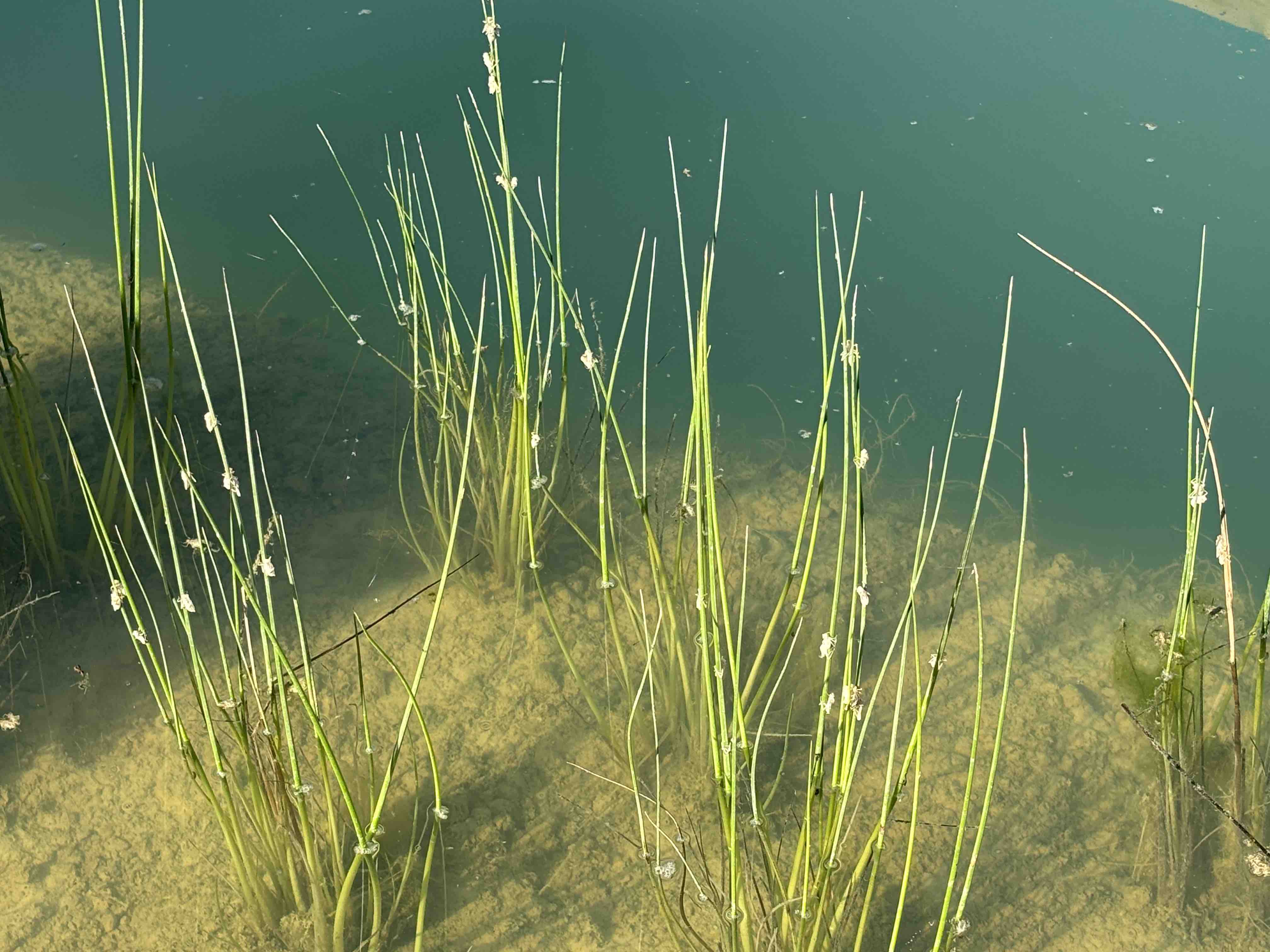
Shedding their skin is a necessity for many insect species. As living organisms whose structural support lies on the outside of their bodies (an exoskeleton), they must replace it as they grow.
The most important molt in the life of dragonflies and damselflies is the one that gives rise to the adult insect. Dragonfly larvae live underwater and are voracious predators of other insects and larvae, such as mosquitoes. The transition from an aquatic to an aerial environment begins with this transformation. The dragonfly larva emerges from the water, usually early in the morning, and climbs vertical structures emerging from the water – such as reeds – until it finds a firm anchor on one of the shoots.
The photograph captures the moment when several larvae has have left their skin at the plants along the edge of a biological pool: they shed their final larval skin, stretched their wings for the first time, pumped hemolymph (the “blood” of insects) into their newly formed adult body, dried thoroughly for about an hour, and finally took flight to begin their aerial lives around the same biological swimming pool.