What is a biological swimming pool?
 Important to know
 Beyond the swim
 How to build
 Compare
 PB 22.000
 Biological swimming pools of Public use
 Janguiscina
 Who we are
 Biological swimming pools
 Landscape architecture
 ETAP
ETAP Solar Sauna
 Rewilding
 News
News Photo of the month
 Gallery
 Holidays with Swimming Pond
 Testimonials
 Awards
 Biological swimming pools around the World
 Piscinas Biológicas® – Live
 FAQs
FAQs Downloads
 Shop
Shop

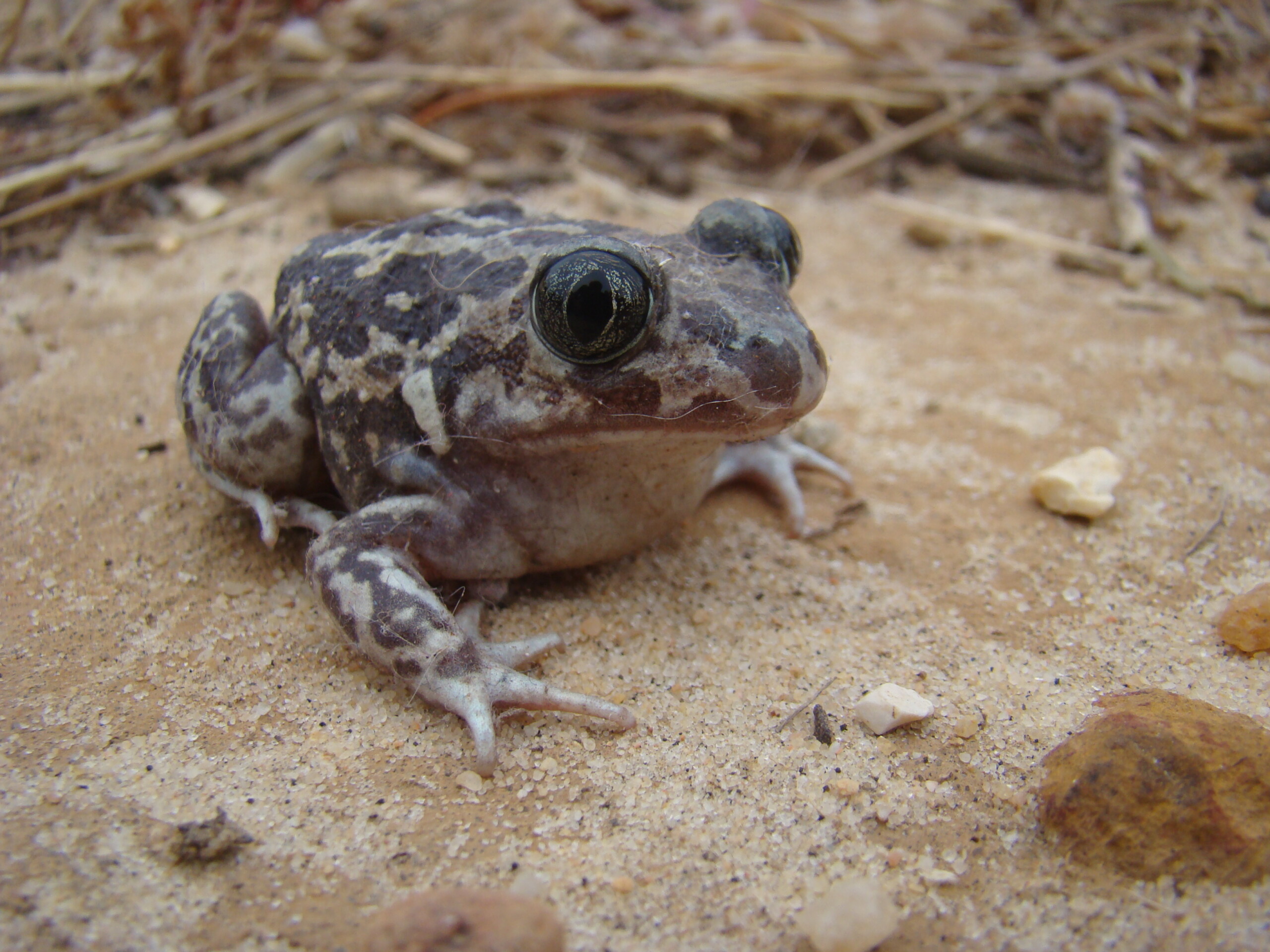
Spring is the time for frogs. It is the time when the singing for mating activity in lakes as well as in biological pools begin. But not all amphibian species wait until spring. The Western Spadefoot, Pelobates cultripes, is an example of these. This species starts looking in autumn for waters as birthplace for the next toad generation. During rainy nights, adult males and females migrate to biological pools as well. And just a few days later you can find little egg packets next to the underwater plants. During winter months tadpoles develop, which can reach even impressive sizes up to 10 cm in late spring! Shortly afterwards, the little toads of the new generation come out of the water to live a hidden life in a terrestrial environment. By using there spadefoot these toads quickly bury themselves in earth of fields and vegetable gardens. These toads are rarely seen, probably the reason why this species is little known but they are well distributed throughout the country.